

Carbon monoxide from a fireplace is one of the most serious, and most preventable, risks of heating season. As the nights turn cold across Mercer County, fireplaces, wood stoves, and furnaces get back to work in homes from Hamilton and Trenton to Princeton, Lawrenceville, and the surrounding communities we serve. Every one of them produces carbon monoxide (CO), a colorless, odorless gas created whenever fuel burns. Your chimney’s job is to carry that gas up and out of the house. When something gets in the way, fireplace carbon monoxide can end up in the rooms where your family lives and sleeps.
Below, we answer the questions homeowners ask us most about carbon monoxide and chimneys: how a chimney leads to CO buildup, what a leak smells like, whether your detector will warn you in time, when to schedule an inspection, and what to do the moment your alarm sounds.
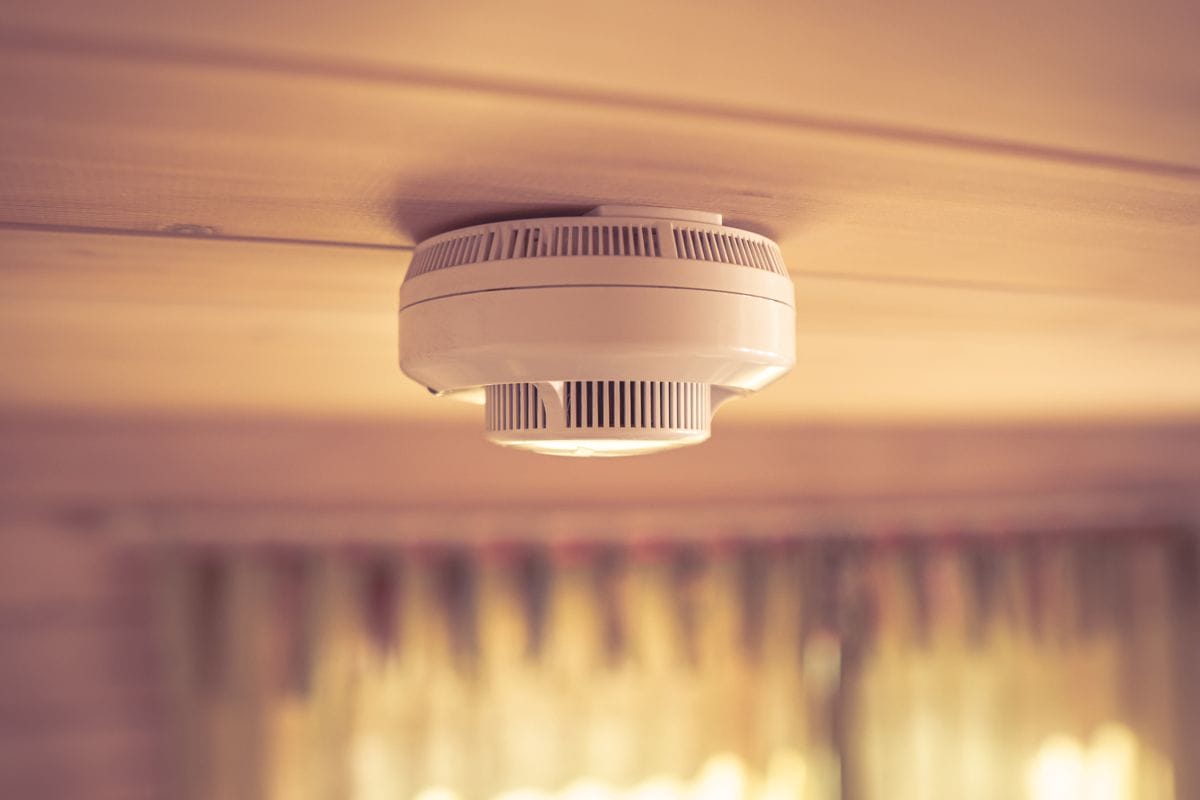
How Does a Chimney Actually Cause Carbon Monoxide Buildup?
A chimney doesn’t create carbon monoxide; the fire or appliance does. The chimney causes buildup when it stops moving that gas outside. A healthy chimney creates an upward draft that pulls smoke and combustion gases out the top. When that draft weakens, or when the flue is blocked or damaged, those gases can spill back into the room. A smoldering, oxygen-starved fire makes things worse, because it produces more CO than a hot fire with good airflow.
Most chimney-related CO problems come down to four causes:
- A blocked flue. Bird and squirrel nests, leaves, and fallen debris can narrow or close off a flue, especially in an uncapped chimney that sat unused all summer. If you’ve heard scratching or chirping overhead, read our guide to animals living in your chimney. Heavy creosote build-up also shrinks the space gases have to escape.
- A cracked or deteriorated liner. Heat, moisture, and acidic combustion byproducts can crack clay flue tiles and erode mortar joints over time, letting gases escape into the chimney structure and sometimes into nearby walls or living spaces. This kind of carbon monoxide chimney leak usually can’t be seen from inside the house.
- Poor draft. Draft depends on chimney height, flue size, outdoor temperature, and how well the flue matches the appliance. A mismatched flue, a cold chimney, or a partial obstruction can all weaken it. Our article on chimney drafts explains the airflow side in more detail.
- A negative-pressure home. In a tightly sealed home, range hoods, bath fans, and clothes dryers push air out, and the house pulls replacement air in, sometimes straight down the chimney. This reversed airflow, called backdrafting, can pull combustion gases indoors, especially as a fire dies down. If you’ve noticed smoke blowing down your chimney, pressure problems may be part of the story.
The same rules apply to wood stoves, inserts, and gas appliances. Many Mercer County homes also have a furnace or water heater that vents through a flue in the chimney. These appliances run constantly in winter, often overnight, and a blocked or deteriorated flue can let exhaust back up into a basement or utility room with none of the visible smoke a fireplace would give off. That’s why a thorough inspection looks at every flue, not just the fireplace. Learn more about appliances venting through your chimney and the benefits of annual furnace flue inspections and cleanings.
What Does a Carbon Monoxide Leak Smell Like?
It doesn’t smell like anything. Carbon monoxide is colorless, odorless, and tasteless, so you can’t rely on your nose to detect it. What people sometimes notice is the smell of other combustion byproducts that escape along with CO, such as smoke, exhaust, or a stale burning odor. Those smells are a useful warning, but their absence doesn’t mean the air is safe, because a fireplace that seems to draft normally can still have a hidden liner crack or pressure problem. A rotten-egg smell is different: it usually points to a natural gas leak, so leave the house and call your gas utility or 911 from outside.
Since you can’t smell CO, watch for signs that venting isn’t working properly:
- Soot staining around the fireplace opening, on the stove glass or door, or around furnace and water heater vents
- Smoke spillage into the room when you light or tend a fire
- Heavy condensation on windows during heating season
- A stale, smoky, or burning smell that lingers after a fire or when the furnace runs
- Pilot or burner flame problems, such as yellow, flickering, or lazy flames on gas appliances instead of a crisp blue flame
One sign alone doesn’t prove a CO problem, but each is a good reason to stop using the appliance and have it checked. For gas flame problems, also call your heating contractor. Pay attention to how your family feels, too. Headache, dizziness, nausea, weakness, shortness of breath, and confusion are easy to mistake for the flu. A key clue is feeling worse at home and better after you leave, especially if several people or pets feel sick at the same time.
Will a Carbon Monoxide Detector Go Off Before I Feel Sick?
In most cases, a working, properly placed CO alarm is designed to sound before carbon monoxide reaches levels that cause serious symptoms in healthy adults. Home CO alarms respond to both the concentration of CO and how long it has been present, so they can ignore brief traces but alarm as exposure builds. That protection has real limits, though:
- Long, low-level exposure may cause symptoms in some people, including infants, older adults, pregnant women, and anyone with heart or lung conditions, before a standard alarm sounds.
- An alarm can’t help if it’s in the wrong place, has a dead battery, or is past the service life listed by the manufacturer.
- Standard smoke alarms don’t detect CO. Only dedicated CO alarms or combination smoke and CO alarms do.
Guidance from the National Fire Protection Association (NFPA) and the U.S. Consumer Product Safety Commission (CPSC) generally recommends a CO alarm outside each sleeping area and on every level of the home, including the basement. Interconnected alarms are a smart upgrade, because when one sounds, they all sound. Follow the manufacturer’s instructions for exact mounting location, test your alarms monthly, and replace batteries and units as directed. Remember that detectors are a backup, not a fix. An alarm tells you something is wrong. An inspection finds out why.
How Often Should I Inspect My Chimney, and When Is the Best Time?
Once a year, ideally in late spring or summer before heating season begins. NFPA 211, the national standard for chimneys, fireplaces, vents, and solid fuel-burning appliances, calls for chimneys, fireplaces, and vents to be inspected annually, whether you burn often or only occasionally. That includes gas fireplaces and the flues serving your furnace and water heater.
Booking in the off-season makes it easier to get the appointment you want and leaves time for any repairs before the first cold night. If fall is already here, don’t wait for spring. Schedule your inspection before your first fire of the season, and certainly before you rely on a fireplace or stove for heat.
A Level 1 inspection is a visual check of the readily accessible parts of your chimney and is suitable when nothing about the system has changed. A Level 2 inspection goes further, using video scanning to see the full length of the flue interior. The camera reveals cracks, liner gaps, creosote, and obstructions that would otherwise go unnoticed. A Level 2 is the right choice after:
- Installing a new stove, insert, or furnace
- Relining the chimney or changing fuel types
- A chimney fire or storm damage
- Buying or selling a home
At Mercer County Chimney Services, our CSIA-certified, licensed, and insured technicians bring more than 30 years of hands-on experience to every chimney inspection in Hamilton, Trenton, Princeton, Lawrenceville, and nearby towns. We explain what we find in plain language, so you can make confident decisions about your home.
What Should I Do Immediately If My CO Detector Goes Off?
Get everyone out of the house right away, then call for help from outside. Don’t stop to track down the source or wait to see whether anyone feels sick. CO can build quickly, and exposure can affect judgment before you realize anything is wrong. Follow these steps:
- Get everyone outside to fresh air right away, pets included.
- Call 911 or your local fire department once you’re outside.
- Get medical attention for anyone with symptoms.
- Don’t go back in until emergency responders tell you it’s safe.
If your detector is chirping rather than sounding its full alarm pattern, it may be signaling a low battery or the end of its service life. Check the manufacturer’s instructions, and if you’re unsure, or anyone feels unwell, treat it as a real alarm. Once the home is cleared, have your chimney and venting system inspected before using the fireplace, stove, or any appliance that vents through the chimney.
Schedule Your Chimney Inspection Before the Cold Sets In
Carbon monoxide is a hazard you can’t see or smell, but you can prevent it. A clear flue, a sound liner, and good draft keep your fireplace, stove, furnace, and water heater venting safely all season. If you’ve noticed any of these warning signs, or it’s been a year since your last inspection, now is the time to have a CSIA-certified technician take a look.
Call Mercer County Chimney Services at (609) 802-5288 or schedule an appointment online to book your chimney inspection today.
